
Hey Sweet Friends,
Here’s the camp verse and the #SSBJC24 goal pics.
Videos are on YouTube June 3-6, 24 Lord willing by 8pm Central.
Looking forward to seeing all y’all!!
Love and prayers….k💗🙏


Hey Sweet Friends,
Here’s the camp verse and the #SSBJC24 goal pics.
Videos are on YouTube June 3-6, 24 Lord willing by 8pm Central.
Looking forward to seeing all y’all!!
Love and prayers….k💗🙏

What Does it Mean to Hide God’s Word in Your Heart?
“Thy word have I hid in my heart.” Psalm 119:11
The steps creak and the small desk light flickers on as I tap it on. The still quiet of the morning silence is broken only by the whir of coffee beans and the hissing of the kettle warming up. This time is set aside to sit down with God before the day starts. It didn’t always begin that early. It started by locking the bathroom door to snag five minutes of sanity for a momma with two littles clamoring for constant attention. Faithfully, day after day, God honored the minutes spent locked in that small space, running down the road at sunrise, and praying by the shore of the lake. All of the little moments are layered in the sedimentary foundations of a heart sold out to Christ. One small, obedient step at a time, God’s Word accumulated, hidden for moments of triumph, trial, and testimony. He doesn’t ask us to be perfect, only that we talk to Him. Like a mom hopes for her teenager to cuddle up and talk like the olden days of toddler life, God’s heart is moved when we make an effort to seek Him with all of ours.
What Does ‘Thy Word Have I Hid in My Heart’ Mean?
“So Moses wrote down this law and gave it to the Levitical priest, who carried the ark of the covenant of the LORD, and to all the elders of Israel.” Deuteronomy 31:9
‘Thy word have I hid in my heart.’ God’s Word is meant to be placed at the center of our lives. He is our Rock, the firm and unchanging foundation we build our lives upon. The NIV Study Bible explains, “Ancient treaties specified that a copy of the treaty was to be placed before the gods at the religious centers of the nations involved. For Israel, that meant to place it in the ark of the covenant.” For New Testament Christ-followers, we have the Living God living in us through the Holy Spirit from Jesus Christ! This means through the daily disciplines of reading the Bible, prayer, and worship, we have the Holy Spirit to help us understand, remember, and apply God’s wisdom to our daily lives.
The Hebrew root of word designates God’s revelation. God’s Word reveals wisdom, understanding, and perspective that we would not have without His divine hand reaching into our hearts through the Bible. It becomes our foundation, and God builds upon our lives in layers of truth, conviction, instruction, encouragement, and love that flow from the supernatural power of the Scripture when we seek Him there. This habit, over a lifetime, allows us to develop the relationship with God we were meant to have and that He desires with us. His truth becomes a part of who we are and how and why we live our daily lives. “This way entails both treasuring (zealously guarding) God’s Word …in one’s heart as well as meditating on it (internalizing, memorizing it, pondering it over time, and considering how it applies to one’s situation),” the Moody Bible Commentary explains, “This should form a lifelong habit of hiding God’s word in his heart so as not to sin against the Lord.”
Created in His image, we were purposed to bring glory to God through our lives here on earth. The biggest expression of love of all time was God’s sacrifice of His Son Jesus on the cross. And Jesus, though He prayed and wept that there would be any other way, went willingly. Our sins are forgiven, and this line of communication and personal relationship between God and humanity is available through the acceptance of Jesus Christ. Our belief in Him ushers the Holy Spirit into our very souls, allowing us to hide and build upon God’s wisdom …within our very hearts and minds.
10 Practical Ways to Hide God’s Word in Our Hearts
“Every word of God is flawless; he is a shield to those who take refuge in him.” Proverbs 30:5
One of the junior high students in our youth ministry recently commented, “I want to read my Bible like you say daily, but I don’t understand it.” It’s a valid point, to which many of us relate. This particular student has been taught how to read the Bible, given a Student Study Bible and a Teen devotional book, but missing is the effort on her part to use those tools. There are podcasts we can listen to hands-free! There are many ways to get into the Word of God each day, to keep His truth top of mind and center of the heart. But, it doesn’t happen without the disciplined effort to open the app, the book, or journal and get quiet with God. Here are ten simple ways to hide God’s word in our hearts, daily.
1. Read the Bible. Set aside time. Start with five minutes, and prayerfully ask God to meet us there.
2. Journal. If it’s hard to focus, we can write a prayer to God each day before diving into Scripture.
3. Pray Scripture. If there is a particular issue we face, we can google Scriptures that apply to those issues. (Always read study Bible notes to make sure to understand the verse in context.) Then, we can write out those verses in prayer to God. Replace general terms with personal pronouns, because His Word is meant for each of us, individually.
4. Study Bible. Reading a study Bible can help define words and describe people, places, and events in the Bible to help us understand them better.
5. Jesus Cards. For a small investment, a box of cards that have Scriptures written on them can be used as bookmarks, placed in places we see often and serve as reminders of God’s Word laced into the everyday corners of our lives.
6. Devotional Books. Not to be used as a replacement to the Bible, but alongside can provide great perspective for the walk or stage of life we are in.
7. Podcasts. From short devotionals to entire sermons, podcasts are a great way to hide God’s Word in our hearts as we drive, work, and walk through our days.
8. Email subscriptions. Subscribe online to subscriptions that will send articles, prayers, devotionals, podcasts, and more right to our phones and computers. It helps us to remember God’s Word throughout the day, and often meets us where were are with a particular question, struggle, or piece of encouragement.
9. Worship Music. Music is a wonderful way to knit God’s Word on our hearts. So many songs are truths straight from Scripture put to a melody that easily becomes stuck in our minds and hidden in our hearts. They can become anthems for seasons we walk through with Jesus.
10. Books. Christian authors and publishers abound with books written about the content of the Bible, and how to apply it to our everyday lives.
What Are the Benefits of Hiding God’s Word in Your Heart?
“How can a young person stay on the path of purity? By living according to your word.” Psalm 119:9
Purity in this context means, “free from all moral taint” (NIV). The Voice paraphrase reads: “How can a young person remain pure? Only by living according to Your word.” The truth of Scripture prepares us, whether we are in need of help or healing, or searching for the opportunity to share our faith, hiding God’s Word in our heart. The Bible tells us to guard our hearts because everything we do and say flows from it. The benefit of hiding God’s Word in our hearts is that we would have the self-control and grace-filled perspective to live and speak in a way that is Christ-centered and God-honoring. Hebrews 4:12 reminds us:
“For the word of God is alive and active. Sharper than any double edged sword, it penetrates even to dividing soul and spirit, joints and marrow; it judges the thoughts and attitudes of the heart.”
The Bible gives us the ability to discern what is right, the next step to take, and provides the comfort, encouragement, discipline, and conviction we need for our daily lives. When we are faithful to read it daily, through the power of the Holy Spirit, we are able to recall God’s truth when we need it! In hard moments, anxious tests, and opportunities to share the gospel truth with others. 2 Timothy 3:16-17 reads:
“All Scripture is God-breathed and useful for teaching, rebuking, correcting, and training in righteousness, so that the servant of God may be thoroughly equipped for every good work.”
Take all things to the Lord in prayer, and look for answers in His Word. “When we come to the Bible to hear from God, we don’t close our eyes, or shut our ears, or disengage our minds,” John Piper explains in his book Reading the Bible Supernaturally. “Rather, it is through these very natural means that God then miraculously, supernaturally opens our spiritual eyes (Ephesians 1:18), ears (Mark 4:9), and minds (1 Corinthians 2:14-16).” Hiding God’s word in our hearts allows us to see, hear, and understand through the heavenly perspective of God, whose ways are not our ways and thoughts are not our thoughts. We connect with the Author of our souls, the One who has knit unique purpose into our lives and cares for us more than any soul on earth ever could.
Thy Word Have I Hid in My Heart: A Prayer to Hide God’s Word in Our Hearts
Father,
You know us completely, God. Only when we make an effort to meet with you daily in prayer, worship, and Scripture can we be fully prepared for the day ahead, and a life that brings glory and honor to You. Father, we pray today for the power of the Holy Spirit to help us understand the Bible, as it applies to our lives each day. You promise that if we seek you with all of our hearts we will find you. You assure us the plans You have for us are good. Father, You are all-knowing and everywhere. You are goodness and love, justice and peace. You are our provider, reminder, teacher, and friend.
Abba, Father; Jesus, Messiah; Spirit, Counselor; One True and Triune God, glory to You in the highest. Show us more of You each day. Teach us, guide us, mold us and help us to hear You correctly and follow Your instruction and guidance faithfully. God, please loft Your voice over all the others that compete for our attention in life. Focus our hearts on You. Ground us in You, our firm foundation. It takes effort and discipline to read the Bible each day, God. We pray for the obedience to do it. May our lives be living witnesses of our Christ-centered steps.
In Jesus’ Name, we pray, Amen.
Faith in Jesus is more than a religion. It goes far beyond following rules and it isn’t at all about feeling bad for what we’ve done wrong past confessing our sin and embracing His forgiveness. Faith in Jesus, living a Christ-centered life, is walking with Him. Reading the Bible, hiding God’s Word in our hearts … is hiding Jesus in our hearts. He is the Living Word, there at the beginning with God, sitting as His right hand now, and has promised to come back again. The more time we spend in Scripture, the better we get to know Jesus, our Savior, Messiah, Son of God … and our Friend.
Author:
Meg Bucher
Sources:
NIV Study Bible, Copyright © 1985, 1995, 2002, 2008, 2011 by Zondervan
Moody Bible Commentary. Copyright 2014. Moody Publishers
by Elizabeth George March 26, 2024
Christ’s death and resurrection is a core value of Christianity. The resurrection is the focal point of every truth Christ taught His disciples while on Earth. He said, “I am the resurrection and the life. The one who believes in me will live, even though they die” (John 11:25). It was the resurrection that turned Jesus’ brokenhearted followers into courageous witnesses and martyrs who, in just a few years, would spread the gospel across the Roman Empire and beyond. The resurrection proclaimed the fact that when Jesus died, so did death. Here are three reasons why Christ died:
Jesus died to buy you back from the bondage of sin. Jesus told His disciples that He must die, and He told them why: “The Son of Man did not come to be served, but to serve, and to give his life as a ransom for many” (Matthew 20:28). When Adam and Eve sinned in the Garden of Eden, mankind came under the bondage of Satan, sin, and death. Jesus’ death paid the ransom price that was necessary to satisfy God’s holiness and justice. God’s holiness required that the penalty be paid, and God’s love provided that payment in the death of the Son ( John 3:16). Jesus’ perfect life was the only sacrifice that could be offered that would satisfy God’s justice. Jesus died so you don’t have to die.
Jesus died to prove His power over death. Jesus had to die not only to pay the penalty for our sin, but also to show His power over death. The apostle Paul said Jesus “was appointed the Son of God in power by his resurrection from the dead”(Romans 1:3-4). Jesus’ resurrection from the dead proves He is God and that He possesses eternal life, and that He can therefore give this same eternal life to all who believe in Him.
Jesus died to defeat death. At first glance, Satan appeared to be victorious in the Garden of Eden (Genesis 3). Adam and Eve had disobeyed God, and their sin resulted in immediate spiritual death and ultimate physical death. Even at the cross, when Jesus died, Satan seemed to have won. But God turned Satan’s apparent victory into defeat when Jesus rose from the dead. Death is no longer a source of dread or fear for us—it “has been swallowed up in victory” (1 Corinthians 15:54). Christ overcame death, and a day is coming when all those who are in Christ will overcome it, too.
Are you a believer in Christ? If so, you will not experience spiritual death. With that in mind, take to heart the apostle Paul’s challenge to “stand firm. Let nothing move you. Always give yourselves fully to the work of the Lord, because you know that your labor in the Lord is not in vain” (1 Corinthians 15:58).
Thank You, Lord, for the resurrection and the reality that death is defeated! Amen
Commit your heart and life to Christ now, with the goal of becoming a man after God’s own heart–you’ll find it the most rewarding pursuit ever!
Take time to thank God for what His death and resurrection means to you.
Christ’s resurrection is a core value of Christianity.
I hope you are encouraged….and gotta love Bing Crosby!!! 🥰
Love and prayers….k 💗🙏
This article is about the religious period. For the carol, see The Twelve Days of Christmas (song). For other uses, see The Twelve Days of Christmas (disambiguation).
| Twelve Days of Christmas | |
|---|---|
| The Adoration of the Magi, Fresco at the Lower Church of the Basilica of San Francesco d’Assisi in Assisi, Italy | |
| Observed by | Christians |
| Type | Christian |
| Observances | Varies by denomination, culture, and nation |
| Date | 25 December – 5 January, inclusive |
| Frequency | annual |
| Related to | Christmas Day, Christmastide, Twelfth Night, Epiphany, and Epiphanytide |
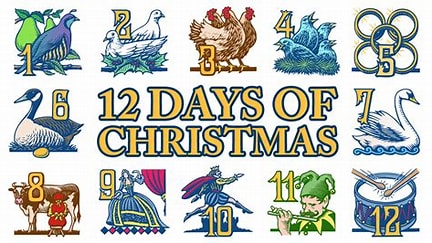
The Twelve Days of Christmas are the festive Christian season celebrating the Nativity.
Christmas Day is the First Day. The Twelve Days are 25 December to 5 January, counting first and last. The Octave, or Eighth Day, is New Year’s Day and the Feast of the Circumcision, the day Jesus was circumcised according to the faith. The evening of the last day is Twelfth Night or Epiphany Eve,[1][2] the next morning being Epiphany.
For Christian denominations such as the Anglican Communion or the Lutheran Church, the Twelve Days are identical to Christmastide.[3][4][5] For the Roman Catholic Church, however, Christmastide lasts longer, running through the Feast of the Baptism of the Lord.[6][7] For some, the Twelve Days are considered December 26 to January 6,[8] thus including Epiphany.
Main article: Christmastide § History
In 567, the Council of Tours “proclaimed the twelve days from Christmas to Epiphany (that is, through the end of 5 January, as Epiphany begins the following day) as a sacred and festive season, and established the duty of Advent fasting in preparation for the feast.”[9][10][11][12] Christopher Hill, as well as William J. Federer, states that this was done in order to solve the “administrative problem for the Roman Empire as it tried to coordinate the solar Julian calendar with the lunar calendars of its provinces in the east.”[clarification needed][13][14]
The Armenian Apostolic Church and Armenian Catholic Church celebrate the Birth and Baptism of Christ on the same day,[15] so that there is no distinction between a feast of Christmas and a feast of Epiphany.
The Oriental Orthodox (other than the Armenians), the Eastern Orthodox, and the Eastern Catholics who follow the same traditions have a twelve-day interval between the two feasts. Christmas and Epiphany are celebrated by these churches on 7 and 19 January using the Julian calendar, which correspond to 25 December and 6 January using the Gregorian calendar. The Twelve Days, using the Julian calendar, end at sunset on 18 January.
For the Eastern Orthodox, both Christmas and Epiphany are among the Twelve Great Feasts that are only second to Easter in importance.[16]
The period between Christmas and Epiphany is fast-free.[16] During this period one celebration leads into another. The Nativity of Christ is a three-day celebration: the formal title of the first day (i.e. Christmas Eve) is “The Nativity According to the Flesh of our Lord, God and Saviour Jesus Christ”, and celebrates not only the Nativity of Jesus, but also the Adoration of the Shepherds of Bethlehem and the arrival of the Magi; the second day is referred to as the “Synaxis of the Theotokos“, and commemorates the role of the Virgin Mary in the Incarnation; the third day is known as the “Third Day of the Nativity”, and is also the feast day of the Protodeacon and Protomartyr Saint Stephen. 29 December is the Orthodox Feast of the Holy Innocents. The Afterfeast of the Nativity (similar to the Western octave) continues until 31 December (that day is known as the Apodosis or “leave-taking” of the Nativity).

The Saturday following the Nativity is commemorated by special readings from the Epistle (1 Tim 6:11–16) and Gospel (Matt 12:15–21) during the Divine Liturgy. The Sunday after the Nativity has its own liturgical commemoration in honour of “The Righteous Ones: Joseph the Betrothed, David the King and James the Brother of the Lord“.
Another of the more prominent festivals that are included among the Twelve Great Feasts is that of the Circumcision of Christ on 1 January.[16] On this same day is the feast day of Saint Basil the Great, and so the service celebrated on that day is the Divine Liturgy of Saint Basil.
On 2 January begins the Forefeast of the Theophany. The Eve of the Theophany on 5 January is a day of strict fasting, on which the devout will not eat anything until the first star is seen at night. This day is known as Paramony (Greek Παραμονή “Eve”), and follows the same general outline as Christmas Eve. That morning is the celebration of the Royal Hours and then the Divine Liturgy of Saint Basil combined with Vespers, at the conclusion of which is celebrated the Great Blessing of Waters, in commemoration of the Baptism of Jesus in the Jordan River. There are certain parallels between the hymns chanted on Paramony and those of Good Friday, to show that, according to Orthodox theology, the steps that Jesus took into the Jordan River were the first steps on the way to the Cross. That night the All-Night Vigil is served for the Feast of the Theophany.
Within the Twelve Days of Christmas, there are celebrations both secular and religious.
Christmas Day, if it is considered to be part of the Twelve Days of Christmas and not as the day preceding the Twelve Days,[3] is celebrated by Christians as the liturgical feast of the Nativity of the Lord. It is a public holiday in many nations, including some where the majority of the population is not Christian. On this see the articles on Christmas and Christmas traditions.
26 December is “St. Stephen’s Day“, a feast day in the Western Church. In the United Kingdom and its former colonies, it is also the secular holiday of Boxing Day. In some parts of Ireland it is denominated “Wren Day“.
New Year’s Eve (31 December) is the feast of Pope St. Sylvester I and is known also as “Silvester“. The transition that evening to the new year is an occasion for secular festivities in many nations, and in several languages is known as “St. Sylvester Night” (“Notte di San Silvestro” in Italian, “Silvesternacht” in German, “Réveillon de la Saint-Sylvestre” in French, and “סילבסטר” in Hebrew).
New Year’s Day (1 January) is an occasion for further secular festivities or for rest from the celebrations of the night before. In the Roman Rite of the Roman Catholic Church, it is the Solemnity of Mary, Mother of God, liturgically celebrated on the Octave Day of Christmas. It has also been celebrated, and still is in some denominations, as the Feast of the Circumcision of Christ, because according to Jewish tradition He would have been circumcised on the eighth day after His Birth, inclusively counting the first day and last day. This day, or some day proximate to it, is also celebrated by the Roman Catholics as World Day of Peace.[17]
In many nations, e. g., the United States, the Solemnity of Epiphany is transferred to the first Sunday after 1 January, which can occur as early as 2 January. That solemnity, then, together with customary observances associated with it, usually occur within the Twelve Days of Christmas, even if these are considered to end on 5 January rather than 6 January.
Other Roman Catholic liturgical feasts on the General Roman Calendar that occur within the Octave of Christmas and therefore also within the Twelve Days of Christmas are the Feast of St. John, Apostle and Evangelist on 27 December; the Feast of the Holy Innocents on 28 December; Memorial of St. Thomas Becket, Bishop and Martyr on 29 December; and the Feast of the Holy Family of Jesus, Mary, and Joseph on the Sunday within the Octave of Christmas or, if there is no such Sunday, on 30 December. Outside the Octave, but within the Twelve Days of Christmas, there are the feasts of Sts. Basil the Great and Gregory of Nazianzus on 2 January and the Memorial of the Holy Name of Jesus on 3 January.
Other saints are celebrated at a local level.
The Second Council of Tours of 567 noted that, in the area for which its bishops were responsible, the days between Christmas and Epiphany were, like the month of August, taken up entirely with saints’ days. Monks were therefore in principle not bound to fast on those days.[18] However, the first three days of the year were to be days of prayer and penance so that faithful Christians would refrain from participating in the idolatrous practices and debauchery associated with the new year celebrations. The Fourth Council of Toledo (633) ordered a strict fast on those days, on the model of the Lenten fast.[19][20]
_-_Twelfth-night_(The_King_Drinks)_-_WGA22083.jpg)
In England in the Middle Ages, this period was one of continuous feasting and merrymaking, which climaxed on Twelfth Night, the traditional end of the Christmas season on 5 January (the last night before Ephiphany which started 6 January). William Shakespeare used it as the setting for one of his most famous stage plays, Twelfth Night. Often a Lord of Misrule was chosen to lead the Christmas revels.[21]
Some of these traditions were adapted from the older pagan customs, including the Roman Saturnalia and the Germanic Yuletide.[22] Some also have an echo in modern-day pantomime where traditionally authority is mocked and the principal male lead is played by a woman, while the leading older female character, or ‘Dame’, is played by a man.
| This section needs additional citations for verification. Please help improve this article by adding citations to reliable sources in this section. Unsourced material may be challenged and removed. (December 2016) (Learn how and when to remove this template message) |
The early North American colonists brought their version of the Twelve Days over from England, and adapted them to their new country, adding their own variations over the years. For example, the modern-day Christmas wreath may have originated with these colonials.[23][24] A homemade wreath would be fashioned from local greenery, and fruits, if available, were added. Making the wreaths was one of the traditions of Christmas Eve; they would remain hung on each home’s front door beginning on Christmas Night (first night of Christmas) through Twelfth Night or Epiphany morning. As was already the tradition in their native England, all decorations would be taken down by Epiphany morning and the remainder of the edibles would be consumed. A special cake, the king cake, was also baked then for Epiphany.
Many in the UK and other Commonwealth nations still celebrate some aspects of the Twelve Days of Christmas. Boxing Day, 26 December, is a national holiday in many Commonwealth nations. Victorian era stories by Charles Dickens, and others, particularly A Christmas Carol, hold key elements of the celebrations such as the consumption of plum pudding, roasted goose and wassail. These foods are consumed more at the beginning of the Twelve Days in the UK.
Twelfth Night is the last day for decorations to be taken down, and it is held to be bad luck to leave decorations up after this.[25] This is in contrast to the custom in Elizabethan England, when decorations were left up until Candlemas; this is still done in some other Western European countries such as Germany.

In the United States, Christmas Day is a federal holiday which holds additional religious significance for Christians.[26]
The traditions of the Twelve Days of Christmas have been nearly forgotten in the United States. Contributing factors include the popularity of the stories of Charles Dickens in nineteenth-century America, with their emphasis on generous giving; introduction of secular traditions in the 19th and 20th centuries, e. g., the American Santa Claus; and increase in the popularity of secular New Year’s Eve parties. Presently, the commercial practice treats the Solemnity of Christmas, 25 December, the first day of Christmas, as the last day of the “Christmas” marketing season, as the numerous “after-Christmas sales” that commence on 26 December demonstrate. The commercial calendar has encouraged an erroneous assumption that the Twelve Days end on Christmas Day and must therefore begin on 14 December.[27]
Many American Christians still celebrate the traditional liturgical seasons of Advent and Christmas, especially Amish, Anglo-Catholics, Episcopalians, Lutherans, Mennonites, Methodists, Moravians, Nazarenes, Orthodox Christians, Presbyterians, and Roman Catholics. In Anglicanism, the designation of the “Twelve Days of Christmas” is used liturgically in the Episcopal Church in the US, having its own invitatory antiphon in the Book of Common Prayer for Matins.[4]
Christians who celebrate the Twelve Days may give gifts on each of them, with each of the Twelve Days representing a wish for a corresponding month of the new year. They may feast on traditional foods and otherwise celebrate the entire time through the morning of the Solemnity of Epiphany. Contemporary traditions include lighting a candle for each day, singing the verse of the corresponding day from the famous The Twelve Days of Christmas, and lighting a yule log on Christmas Eve and letting it burn some more on each of the twelve nights. For some, the Twelfth Night remains the night of the most festive parties and exchanges of gifts. Some households exchange gifts on the first (25 December) and last (5 January) days of the Twelve Days. As in former times, the Twelfth Night to the morning of Epiphany is the traditional time during which Christmas trees and decorations are removed.[citation needed]
January 5th: Twelfth Night or Epiphany Eve. Twelfth Night, the last evening of the traditional Twelve Days of Christmas, has been observed with festive celebration ever since the Middle Ages.
There are, in fact, twelve days between Christmas Day and the eve of the Epiphany on January 5.
The Twelve Days of Christmas … in most of the Western Church are the twelve days from Christmas until the beginning of Epiphany (January 6th; the 12 days count from December 25th until January 5th). In some traditions, the first day of Christmas begins on the evening of December 25th with the following day considered the First Day of Christmas (December 26th). In these traditions, the twelve days begin December 26[th] and include Epiphany on January 6[th].
On the Twelve Days of Christmas Alleluia. Unto us a child is born: O come, let us adore Him. Alleluia.
As with the Easter cycle, churches today celebrate the Christmas cycle in different ways. Practically all Protestants observe Christmas itself, with services on 25 December or the evening before. Anglicans, Lutherans and other churches that use the ecumenical Revised Common Lectionary will likely observe the four Sundays of Advent, maintaining the ancient emphasis on the eschatological (First Sunday), ascetic (Second and Third Sundays), and scriptural/historical (Fourth Sunday). Besides Christmas Eve/Day, they will observe a 12-day season of Christmas from 25 December to 5 January.
The Council of Tours (567) proclaimed the twelve days from Christmas to Epiphany as a sacred and festive season, and established the duty of Advent fasting in preparation for the feast. The Council of Braga (563) forbade fasting on Christmas Day.
Around the year 400 the feasts of St Stephen, John the Evangelist and the Holy Innocents were added on succeeding days, and in 567 the Council of Tours ratified the enduring 12-day cycle between the nativity and the epiphany.
In the year 567 the church council of Tours called the 13 days between December 25 and January 6 a festival season.
The Second Council of Tours (can. xi, xvii) proclaims, in 566 or 567, the sanctity of the “twelve days” from Christmas to Epiphany, and the duty of Advent fast; …and that of Braga (563) forbids fasting on Christmas Day. Popular merry-making, however, so increased that the “Laws of King Cnut”, fabricated c. 1110, order a fast from Christmas to Epiphany.
The Council of Tours (567) decreed the 12 days from Christmas to Epiphany to be sacred and especially joyous, thus setting the stage for the celebration of the Lord’s birth…
This arrangement became an administrative problem for the Roman Empire as it tried to coordinate the solar Julian calendar with the lunar calendars of its provinces in the east. While the Romans could roughly match the months in the two systems, the four cardinal points of the solar year–the two equinoxes and solstices–still fell on different dates. By the time of the first century, the calendar date of the winter solstice in Egypt and Palestine was eleven to twelve days later than the date in Rome. As a result the Incarnation came to be celebrated on different days in different parts of the Empire. The Western Church, in its desire to be universal, eventually took them both–one became Christmas, one Epiphany–with a resulting twelve days in between. Over time this hiatus became invested with specific Christian meaning. The Church gradually filled these days with saints, some connected to the birth narratives in Gospels (Holy Innocents’ Day, December 28, in honor of the infants slaughtered by Herod; St. John the Evangelist, “the Beloved,” December 27; St. Stephen, the first Christian martyr, December 26; the Holy Family, December 31; the Virgin Mary, January 1). In 567, the Council of Tours declared the twelve days between Christmas and Epiphany to become one unified festal cycle.
In 567 AD, the Council of Tours ended a dispute. Western Europe celebrated Christmas, 25 December, as the holiest day of the season… but Eastern Europe celebrated Epiphany, 6 January, recalling the Wise Men’s visit and Jesus’ baptism. It could not be decided which day was holier, so the Council made all 12 days from 25 December to 6 January “holy days” or “holidays,” These became known as “The Twelve Days of Christmas.”
Western Europe celebrated Christmas December 25 as the holiest day. Eastern Europe celebrated January 6 the Epiphany, the visit of the Wise Men, as the holiest day… and so they had this council and they decided to make all twelve days from December 25 to January 6 the Twelve Days of Christmas.
De Decembri usque ad natale Domini, omni die ieiunent. Et quia inter natale Domini et epiphania omni die festivitates sunt, itemque prandebunt. Excipitur triduum illud, quo ad calcandam gentilium consuetudinem, patres nostri statuerunt privatas in Kalendariis Ianuarii fieri litanias, ut in ecclesiis psallatur, et hora octava in ipsis Kalendis Circumcisionis missa Deo propitio celebretur. (Translation: “In December until Christmas, they are to fast each day. Since between Christmas and Epiphany there are feasts on each day, they shall have a full meal, except during the three-day period on which, in order to tread Gentile customs down, our fathers established that private litanies for the Calends of January be chanted in the churches, and that on the Calends itself Mass of the Circumcision be celebrated at the eighth hour for God’s favour.”)
Christmas is a major holiday for Christians, although some non-Christians in the United States also mark the day as a holiday.
Article link: https://en.wikipedia.org/wiki/Twelve_Days_of_Christmas
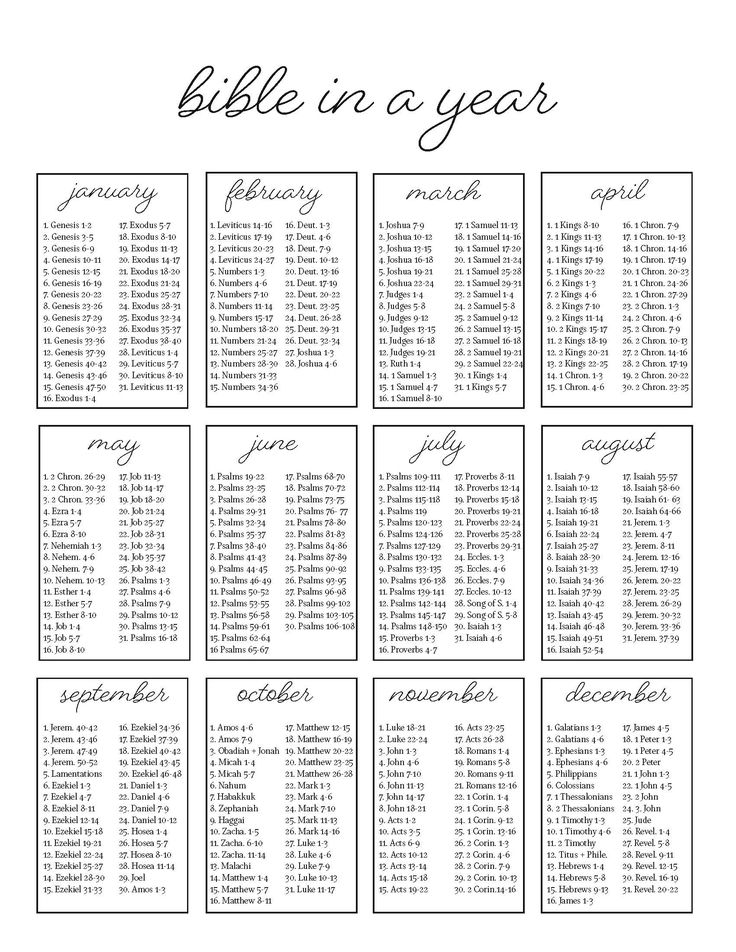
Hey Sweet Friends,
I found this wonderful resource and wanted to share it with you.
I pray you are encouraged to dig deeper into the Word this New Year!!
Keep seeking the Lord!!
Love and prayers….k 💗🙏
Article credit from Pinterest: Natacha Dubois

Hey Sweet Friends,
Here is a lovely article to help better understand…why to study God’s Word.
I am praying you are encouraged to know Jesus more!!
Love and prayers….k 💗🙏
One Minute Bible Students
Kevin Beard
 America has become a land of instant everything. One can purchase instant soup, instant coffee, instant iced tea, instant mashed potatoes, and countless other instant items. The advent of the microwave oven also has increased this demand for instantaneous fulfillment. No longer must hungry consumers wait thirty minutes for a meal to be prepared; now they can have it piping hot in only thirty seconds. If Americans cannot have it in an instant, then they do not want it at all.
Unfortunately, this attitude of having everything in an instant has not missed the realm of Christian life. Because Bible knowledge can never be attained instantaneously, many Christians in America neglect studying. This can be seen in the advertisement for a new “Bible” that is on the market: the “One Minute Bible.” The advertisement for this book asks, “Never seem to have enough time to regularly read the Bible?” It then goes on to describe how the book is arranged into 366 daily one minute Bible readings that highlight “every primary Biblical topic and theme.” Just like instant coffee, now there is instant Bible knowledge available, and all it takes is one minute per day!
This attitude toward Bible study contributes to the increasing departure from the faith that continues in the church today. Because brethren have not devoted the time to learning what God’s will is, they are “…tossed to and fro, and carried about with every wind of doctrine,…” (Eph. 4:14). And there are many contrary winds blowing in the brotherhood today, whose destructive forces exceed those of any hurricane, tornado, or typhoon.
One of the best ways to avoid such damage to the Lord’s body is by prevention. When hurricane warnings are given, home owners and store owners scurry to board up windows, store up provisions, and to make whatever preparation they can for the coming storm. The same principle holds true for the Lord’s church. The warning was given long ago: “Now the Spirit speaketh expressly, that in the latter times some shall depart from the faith, giving heed to seducing spirits, and doctrines of devils” (1 Tim. 4:1). Those in the early church who heeded the warning protected themselves from the coming departure by being aware of it and by knowing what the truth of God’s will is (1 Tim. 4:6). The same preparation must be made today. The people of God must be aware that departure is taking place and must not be ignorant of His Word.
God’s warning to Israel ought also to be a warning to the church. “My people are destroyed for lack of knowledge: because thou hast rejected knowledge, I will also reject thee,…” (Hos. 4:6). Knowledge of God’s Word protects from sin (Psa. 119:11). Christians are commanded to grow in the knowledge of Jesus Christ (2 Pet. 3:18). Searching the Scriptures to prove what teachings are true is a noble thing to do (Acts 17:11). But all of these things demand determined study of the Word, not an instantaneous obtaining of knowledge.
An old saying states that anything worthwhile does not come easy. This principle certainly is true of Bible knowledge. Men who have devoted their entire lives to studying the Bible would be the first to admit that there is no end to its depth. Only a daily feasting on the Word can bring about that kind of knowledge that the Christian needs. But he first must develop that intense desire to know God’s will. “As newborn babes, desire the sincere milk of the word, that ye may grow thereby” (1 Pet. 2:2). Then, based on the intense desire, must come the diligent study. “Study to show thyself approved unto God, a workman that needeth not to be ashamed, rightly dividing the word of truth” (2 Tim. 2:15).
When Christians again realize the importance of Bible study and devote the time to it that is necessary, then the false teachers in the land will have a much harder task in trying to lead people away from the truth.
Kevin D. Beard, Bybee Banner, 5/7/00
TheBible.net

Hey Sweet Friends….La Familia,
Spring Summer Bible Journaling Camp is soon upon us!!
We will be studying God’s Promises and how to share them with those we love. There will be different Bible Journaling techniques taught as well as a message to encourage your faith walk. All you need is a composition notebook, Bible, basic art supplies and the kit.
You can still follow along and use your own kit.
It will be May 29th thru June 2, 2023 7:00 PM on YouTube.
Go to JosephinesDesigns.com or @josephinesdesigns.com
To request a FREE Bible Journaling kit email: JosephinesDesigns.com@gmail.com
Please put in the subject line: SS Bible Journaling Camp
In order to receive a FREE kit you must:
There are a limited number of kits…so be sure to sign up quickly.
For those outside the US and a member of the channel, 18 years or older….email and I can email you free links to print out and join in.
No information is given away or used for anything but the Bible Journaling Camp.
We will also have a private Zoom with a special project and time to chat with fellow classmates. Saturday, June 3rd. To participate in the Zoom you must register for the camp. Same rules apply.
I look so forward to being with everyone in the Word!!
Love and prayers….k
 Josephine's Designs

